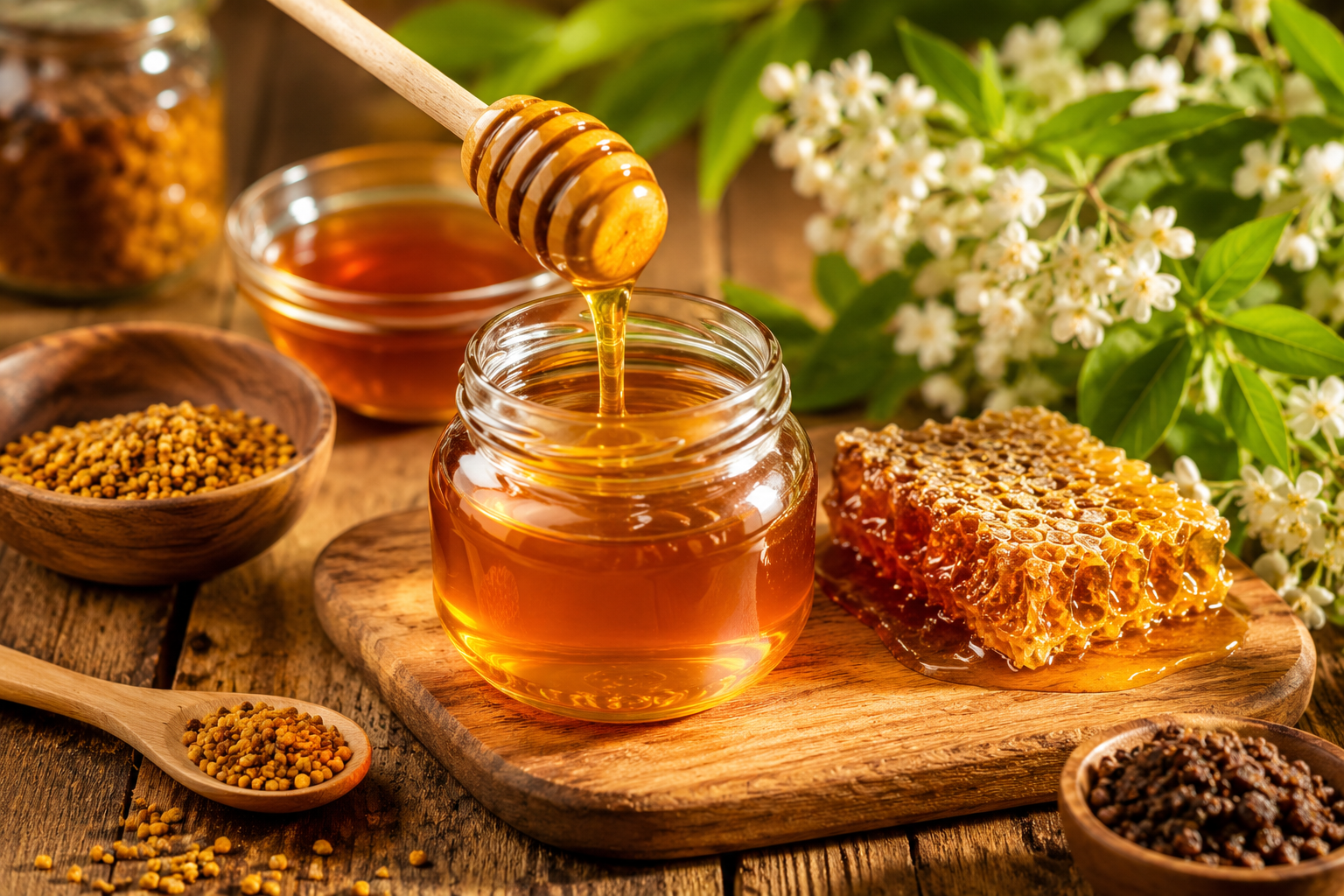
Wild Honey in Traditional Wellness Practices
Wild honey has been treasured by civilizations around the world for thousands of years. Long before modern sweeteners became common, communities depended on wild honey not only for its naturally sweet taste but also for its role in traditional wellness practices. Harvested from bees that collect nectar from diverse wildflowers growing in forests and untouched natural landscapes, wild honey continues to be appreciated for its purity, distinctive flavor, and naturally occurring nutrients.
Today, interest in natural foods has increased significantly as more people seek wholesome alternatives to highly processed ingredients. Wild honey has become one of the most preferred natural sweeteners because it combines exceptional taste with a long history of traditional use. From Ayurvedic wellness practices to household remedies passed down through generations, wild honey continues to occupy a respected place in everyday life.
Unlike refined sweeteners that undergo extensive processing, wild honey retains many of its naturally occurring compounds when handled carefully. This has contributed to its popularity among individuals who appreciate foods that remain close to their natural state. While people enjoy wild honey in beverages, desserts, and breakfast dishes, its historical importance extends far beyond the kitchen.
Understanding the traditional significance of wild honey provides valuable insight into why this remarkable natural food continues to be valued across cultures even today.
Table of Contents
- Introduction to Wild Honey
- What Is Wild Honey?
- The History of Wild Honey in Traditional Wellness Practices
- Why Wild Honey Has Been Valued for Centuries
- Wild Honey in Ayurveda
- Nutritional Composition of Wild Honey
- Natural Antioxidants Found in Wild Honey
- Traditional Uses of Wild Honey Around the World
- Wild Honey in Daily Wellness Routines
- Traditional Honey Remedies Passed Through Generations
- Wild Honey and Herbal Preparations
- Wild Honey as a Natural Sweetener
- Ways to Include Wild Honey in Your Daily Diet
- How to Choose Pure Wild Honey
- Tips for Storing Wild Honey Properly
- Common Myths About Wild Honey
- Frequently Asked Questions
- Conclusion
What Is Wild Honey?
Wild honey is produced by bees that build their colonies in forests, rocky landscapes, tree hollows, and other natural environments. Instead of depending primarily on cultivated flowering crops, these bees gather nectar from numerous wild plant species that bloom throughout different seasons.
The diverse floral sources contribute to the distinctive characteristics of wild honey. Each batch may differ slightly in color, aroma, texture, and taste depending on the geographical region, climate, flowering season, and vegetation available to the bees. These natural variations are one of the qualities that make wild honey unique.
Unlike standardized commercial honey, wild honey often reflects the biodiversity of the environment from which it originates. Every spoonful carries the influence of countless flowering plants growing naturally in forests and hills.
Another reason wild honey receives widespread appreciation is its minimal processing. Responsible producers carefully filter impurities while preserving the honey’s natural composition as much as possible. This allows consumers to experience the authentic taste and aroma that have been appreciated for generations.
Because no two forests are identical, no two batches of wild honey are exactly the same. This natural diversity makes every harvest unique.
The History of Wild Honey in Traditional Cultures
The relationship between humans and honey stretches back thousands of years. Archaeological discoveries indicate that early civilizations collected honey long before agriculture became widespread. Ancient rock paintings found in different parts of the world even depict people harvesting honey from wild bee colonies.
Throughout history, wild honey has served multiple purposes. Besides being used as food, it became an important ingredient in religious ceremonies, cultural traditions, and various wellness practices.
In ancient Egypt, honey was highly valued and often offered during sacred rituals. Greek and Roman civilizations regarded honey as an important natural food and incorporated it into daily meals. Traditional Chinese practices also recognized honey as a valuable dietary ingredient.
Across Africa, indigenous communities harvested wild honey from forests using sustainable methods that respected natural bee habitats. Similar traditions continue in many regions even today.
India also shares a rich history of wild honey collection. Forest-dwelling communities have gathered honey from naturally occurring bee colonies for centuries while preserving traditional harvesting techniques. These practices demonstrate a deep understanding of nature and emphasize responsible collection methods that protect bee populations.
The continued appreciation of wild honey across civilizations reflects its enduring importance as a naturally valuable food.
Why Wild Honey Has Been Valued for Centuries
Wild honey has remained popular across generations because it offers qualities that extend beyond sweetness alone. Traditional societies appreciated its pleasant flavor, natural preservation properties, and versatility in both food preparation and wellness practices.
One reason for its lasting popularity is its remarkable shelf life. Properly stored honey can remain usable for an exceptionally long period while maintaining its natural characteristics. This made it especially valuable before modern refrigeration existed.
Another reason is its pleasant balance of sweetness and floral complexity. Since bees collect nectar from numerous flowering plants, the resulting honey often develops rich layers of flavor that cannot easily be replicated through artificial means.
Wild honey also became an important household ingredient because it could be used in multiple ways. Families incorporated it into beverages, festive recipes, desserts, herbal preparations, and traditional food combinations. Its versatility allowed it to become part of daily routines rather than being reserved only for special occasions.
As nutritional awareness continues to grow, modern consumers are rediscovering the same qualities that earlier generations appreciated naturally.
Wild Honey in Ayurveda
Ayurveda, India’s traditional system of wellness, has recognized honey for centuries. Classical Ayurvedic literature describes honey as an important natural ingredient that can complement various herbal preparations when used appropriately.
Within Ayurveda, honey is commonly known as Madhu. It has traditionally been combined with herbs and plant-based formulations to improve palatability and assist in their consumption. Its naturally sweet taste makes herbal preparations easier to include in daily routines.
Wild honey has also been incorporated into seasonal wellness practices, where it is mixed with warm water, herbal infusions, and other traditional ingredients. Many households continue these customs today, preserving practices that have been handed down through generations.
Ayurveda also emphasizes mindful consumption. Rather than using excessive quantities, traditional wisdom encourages moderation and balance while selecting high-quality natural ingredients.
The continued presence of honey in Ayurvedic traditions highlights its long-standing importance as a respected natural food.
Nutritional Composition of Wild Honey
Wild honey contains naturally occurring carbohydrates that provide a quick source of energy. Along with these carbohydrates, it also contains small amounts of vitamins, minerals, enzymes, amino acids, and beneficial plant compounds.
Its nutritional profile varies according to the flowers visited by bees. Different flowering plants contribute different natural compounds, creating subtle differences between batches collected from separate regions.
Wild honey also contains naturally occurring organic acids that contribute to its characteristic flavor profile. These compounds, together with its floral aroma, help distinguish authentic wild honey from heavily processed alternatives.
Although wild honey is primarily enjoyed as a natural sweetener, its complex composition makes it far more interesting than refined sugar, which consists almost entirely of purified sucrose.
The diversity of nutrients found naturally in wild honey explains why it has remained an important part of traditional diets across many cultures.
Natural Antioxidants Found in Wild Honey
One of the most appreciated qualities of wild honey is its naturally occurring antioxidant content. These antioxidants originate from the nectar of flowering plants visited by bees and contribute to the unique composition of each batch.
Wild honey contains naturally occurring flavonoids, phenolic compounds, and other plant-derived substances that help protect the honey itself from natural degradation. The exact concentration varies depending on geographical location, floral diversity, harvesting season, and environmental conditions.
Forests containing a wide variety of flowering plants often produce honey with particularly diverse antioxidant profiles because bees collect nectar from multiple botanical sources.
This natural diversity is one reason many people prefer wild honey over highly refined sweeteners. Rather than serving only as a source of sweetness, wild honey offers a more complex nutritional composition shaped entirely by nature.
Traditional Uses of Wild Honey Around the World
Wild honey has played an important role in traditional food cultures across continents for thousands of years. Although harvesting methods and local customs differ from one region to another, many communities have shared a common appreciation for honey as a valuable natural food. From dense tropical forests to mountainous regions, wild honey has long been regarded as a prized ingredient because of its distinctive flavor, natural sweetness, and versatility.
In India, wild honey has been part of everyday life for generations. Forest communities have traditionally harvested honey using sustainable practices that respect bee colonies and their natural habitats. Honey has been enjoyed as a simple sweetener, mixed into herbal beverages, and incorporated into festive recipes prepared during seasonal celebrations. Many traditional households continue these practices today, demonstrating how deeply wild honey is woven into Indian culinary and cultural traditions.
Beyond India, honey has also held significance in many ancient civilizations. Traditional Chinese practices recognized honey as a naturally sweet ingredient that complemented herbal preparations. Ancient Egyptian records describe honey as a valued commodity used in food, ceremonial offerings, and household applications. Greek and Roman civilizations appreciated honey as one of nature’s finest sweeteners long before refined sugar became widely available.
Across African forests, indigenous honey hunters developed remarkable techniques to collect wild honey while preserving natural bee habitats. These sustainable harvesting methods continue in some regions even today, reflecting centuries of knowledge passed from one generation to another.
Although cultures differ in their customs, the continued presence of wild honey throughout history demonstrates its lasting importance as a naturally valued food.
Wild Honey in Daily Wellness Routines
One reason wild honey remains popular today is its ability to fit easily into modern lifestyles while preserving traditional values. Many people choose to include wild honey in their daily routines because it provides natural sweetness along with a rich flavor that enhances numerous foods and beverages.
A common morning routine involves mixing a small amount of wild honey with warm water. Others prefer adding it to herbal teas, fresh fruit juices, or homemade smoothies. These simple practices have become part of many households seeking natural alternatives to highly refined sweeteners.
Breakfast is another ideal opportunity to enjoy wild honey. It pairs well with oatmeal, yogurt, fresh fruits, pancakes, whole-grain toast, and homemade granola. Because of its pleasant floral flavor, only a moderate amount is often needed to enhance the taste of these foods.
Wild honey is equally useful during the day. It can be stirred into lemon water, blended into protein smoothies, or drizzled over fruit salads as a wholesome finishing touch. Many people also use it while preparing homemade salad dressings, marinades, or healthy desserts.
Its versatility allows wild honey to become part of everyday meals without requiring complicated recipes. This flexibility has contributed significantly to its continued popularity among individuals seeking natural ingredients that complement balanced eating habits.
Traditional Honey Remedies Passed Through Generations
For centuries, families have preserved traditional knowledge regarding the use of wild honey in everyday life. These practices were passed orally from grandparents to younger generations, creating customs that continue in many households today.
Wild honey has traditionally been combined with ingredients such as ginger, turmeric, black pepper, cinnamon, tulsi, lemon, and various herbs commonly found in Indian kitchens. These combinations became familiar household preparations during seasonal changes and were often enjoyed as part of daily wellness routines.
Across different cultures, recipes varied according to local ingredients and regional traditions. Some communities prepared warm herbal drinks using honey, while others mixed honey into nourishing foods served during festivals or family gatherings. These recipes reflected local biodiversity and centuries of culinary experience.
Although modern scientific research continues to explore honey’s properties, many traditional practices have survived because families appreciated the simplicity of combining natural ingredients that were easily available at home.
These long-standing customs demonstrate how wild honey became much more than a sweetener—it evolved into an important ingredient that connected food, culture, and traditional knowledge.
Wild Honey and Herbal Preparations
One of the most recognized traditional uses of wild honey is its role in herbal preparations. In Ayurveda and other traditional wellness systems, honey has often been combined with carefully selected herbs because its natural sweetness makes herbal formulations easier to consume.
Herbal powders that possess naturally bitter or earthy flavors are frequently mixed with honey to improve taste and texture. This simple practice has remained popular for generations because it allows traditional herbs to be incorporated conveniently into daily routines.
Wild honey also complements herbal teas prepared from ingredients such as tulsi, ginger, cinnamon, licorice, lemongrass, and other botanicals. When these beverages cool slightly before honey is added, their natural flavors blend together pleasantly while preserving the honey’s desirable characteristics.
Many households also prepare seasonal beverages by combining honey with warm water and freshly squeezed lemon juice. This simple recipe has remained popular because of its refreshing taste and ease of preparation.
The compatibility of wild honey with numerous herbs explains why it has maintained an important place in traditional wellness practices for centuries.
Wild Honey as a Natural Sweetener
Before refined sugar became widely available, honey served as one of the world’s primary natural sweeteners. Even today, many people continue choosing wild honey because it offers both sweetness and a distinctive floral character that processed sugar cannot provide.
Unlike refined sweeteners that contribute sweetness alone, wild honey adds complexity to recipes through its naturally occurring aromas and flavor compounds. Depending on the flowers visited by bees, each batch may develop subtle notes ranging from floral and fruity to mildly woody or earthy.
This variety allows wild honey to enhance both sweet and savory recipes. It complements baked foods, fruit dishes, breakfast cereals, yogurt, herbal beverages, smoothies, and homemade desserts. Many cooks also use it while preparing marinades, salad dressings, and sauces.
Its versatility allows wild honey to replace refined sugar in many recipes while contributing its own unique taste profile. This has encouraged many households to choose honey as a preferred natural sweetener for everyday cooking.
As consumers increasingly seek foods with fewer highly processed ingredients, wild honey continues to gain popularity as a wholesome alternative that combines excellent flavor with a long tradition of culinary use.
Ways to Include Wild Honey in Your Daily Diet
Wild honey is one of the easiest natural ingredients to incorporate into everyday meals. Its pleasant sweetness, smooth texture, and distinctive floral aroma make it suitable for a wide variety of recipes. Whether used at breakfast, during midday snacks, or in homemade desserts, wild honey offers a simple way to replace refined sugar while adding its own unique character.
One of the most popular ways to enjoy wild honey is by drizzling it over fresh fruits. Apples, bananas, berries, papaya, pears, and citrus fruits pair exceptionally well with its natural sweetness. The combination creates a refreshing snack that is both flavorful and satisfying.
Breakfast foods also benefit from the addition of wild honey. Oatmeal, porridge, muesli, yogurt bowls, pancakes, waffles, and whole-grain toast become more enjoyable with a small drizzle of honey. Since wild honey has a naturally rich flavor, only a modest quantity is usually sufficient.
Wild honey is equally suitable for beverages. Many people stir it into herbal teas, warm water with lemon, fresh fruit juices, and homemade smoothies. When adding honey to hot drinks, allowing the beverage to cool slightly before mixing helps preserve its natural characteristics.
It can also be used in homemade salad dressings by combining it with olive oil, lemon juice, herbs, and mild spices. This creates a balanced dressing that complements both vegetable salads and fruit salads.
For those who enjoy cooking, wild honey can be included in homemade energy bars, granola, baked fruits, healthy muffins, overnight oats, and wholesome desserts. Its versatility allows it to become a valuable ingredient throughout the day.
The wide variety of culinary applications explains why wild honey has remained a favorite natural sweetener across generations.
How to Choose Pure Wild Honey
Selecting high-quality wild honey is essential for enjoying its authentic flavor and natural qualities. Since numerous honey products are available in today’s market, understanding what to look for can help consumers make informed purchasing decisions.
The first step is reading the product label carefully. Pure wild honey should clearly list honey as the only ingredient. Products containing added sugar, artificial sweeteners, flavors, or preservatives should generally be avoided if the goal is to purchase authentic honey.
The appearance of wild honey can vary naturally. Its color may range from light golden to deep amber depending on the flowers visited by the bees. Differences in color do not necessarily indicate differences in quality. Instead, they often reflect the diversity of floral sources.
Natural crystallization is another characteristic that many consumers misunderstand. High-quality honey may gradually crystallize during storage. This is a natural process that depends on the honey’s glucose content and storage temperature. Crystallization does not mean the honey has spoiled or become impure.
Packaging also deserves attention. Quality honey should be packed hygienically in food-grade containers that protect it from moisture and contamination. Airtight packaging helps preserve freshness and aroma throughout storage.
Purchasing honey from trusted producers who provide clear sourcing information and transparent labeling offers greater confidence regarding quality and authenticity.
Tips for Storing Wild Honey Properly
Proper storage plays an important role in maintaining the quality of wild honey. Fortunately, honey has one of the longest natural shelf lives among foods when stored correctly.
Wild honey should always be kept in a clean, airtight container. Glass jars are generally considered one of the best storage options because they do not react with the honey and help preserve its natural flavor. Food-grade stainless steel containers are also suitable for larger quantities.
Storage location is equally important. Honey should be kept in a cool, dry place away from direct sunlight and excessive heat. Exposure to high temperatures for prolonged periods may gradually affect its aroma and natural characteristics.
Moisture is one of honey’s greatest enemies. Because honey naturally absorbs moisture from the surrounding environment, the container should be sealed immediately after each use. Always use a clean, dry spoon when serving honey to avoid introducing water into the jar.
Many people refrigerate honey, believing it will stay fresh longer. In reality, refrigeration often speeds up crystallization. Room-temperature storage is generally the preferred option for maintaining a smooth consistency.
If crystallization occurs, the honey can simply be placed in warm water while remaining inside its sealed container. Gentle warming gradually returns it to a liquid state without significantly affecting its quality.
Following these simple storage practices helps preserve the flavor, aroma, and texture of wild honey for an extended period.
Common Myths About Wild Honey
Despite its long history, several misconceptions about wild honey continue to circulate. Understanding the facts helps consumers make better decisions.
One common myth is that crystallized honey is fake. In reality, crystallization is a completely natural process that occurs in many varieties of genuine honey. The rate of crystallization depends on the floral source and natural sugar composition.
Another misconception is that darker honey is always better than lighter honey. Color alone cannot determine quality. Different flowers naturally produce honey in varying shades, and each variety has its own unique flavor profile.
Some people also believe that all raw honey looks identical. This is incorrect because natural variations in nectar sources, geography, climate, and harvesting season produce noticeable differences in color, aroma, texture, and taste.
Another widespread myth suggests that heating honey slightly immediately destroys all of its qualities. While prolonged exposure to excessive heat should be avoided, gentle warming for practical purposes such as dissolving crystallization is generally acceptable.
Understanding these natural characteristics allows consumers to appreciate authentic wild honey without relying on inaccurate assumptions.
Frequently Asked Questions
Is wild honey different from regular honey?
Yes. Wild honey is collected from bees that forage on naturally growing flowers in forests and wild landscapes. Regular honey is generally harvested from managed bee colonies maintained by beekeepers. The floral sources often influence differences in flavor, aroma, and appearance.
Can wild honey be used every day?
Wild honey can be enjoyed daily in moderation as part of a balanced diet. Many people include it in beverages, breakfast meals, desserts, and healthy snacks.
Why does wild honey crystallize?
Crystallization is a natural process that depends on the honey’s glucose content, floral source, and storage conditions. It is not a sign of spoilage.
What is the best way to store wild honey?
Store wild honey in an airtight container at room temperature in a cool, dry place away from direct sunlight and moisture.
Can wild honey replace refined sugar?
Yes. Wild honey is widely used as a natural sweetener in beverages, baking, cooking, and homemade recipes. Because of its rich flavor, smaller quantities are often sufficient.
Conclusion
Wild honey has earned its place as one of nature’s most valued foods through centuries of traditional use, cultural significance, and culinary versatility. From ancient civilizations to modern households, people have appreciated its distinctive flavor, natural sweetness, and ability to complement a wide variety of foods and beverages.
Its continued importance in Ayurvedic traditions, herbal preparations, and family recipes demonstrates how deeply rooted wild honey is in traditional wellness practices. At the same time, its versatility makes it equally relevant for today’s lifestyles, where many consumers are seeking wholesome alternatives to refined sweeteners.
Choosing pure wild honey, storing it correctly, and incorporating it into everyday meals allows you to enjoy its authentic qualities throughout the year. Whether drizzled over breakfast, blended into beverages, added to healthy recipes, or simply enjoyed by the spoonful, wild honey remains a timeless natural ingredient that continues to connect tradition with modern living.
External Resources
- National Center for Biotechnology Information (NCBI): https://www.ncbi.nlm.nih.gov/
- World Health Organization (WHO): https://www.who.int/
- Ministry of AYUSH: https://www.ayush.gov.in/