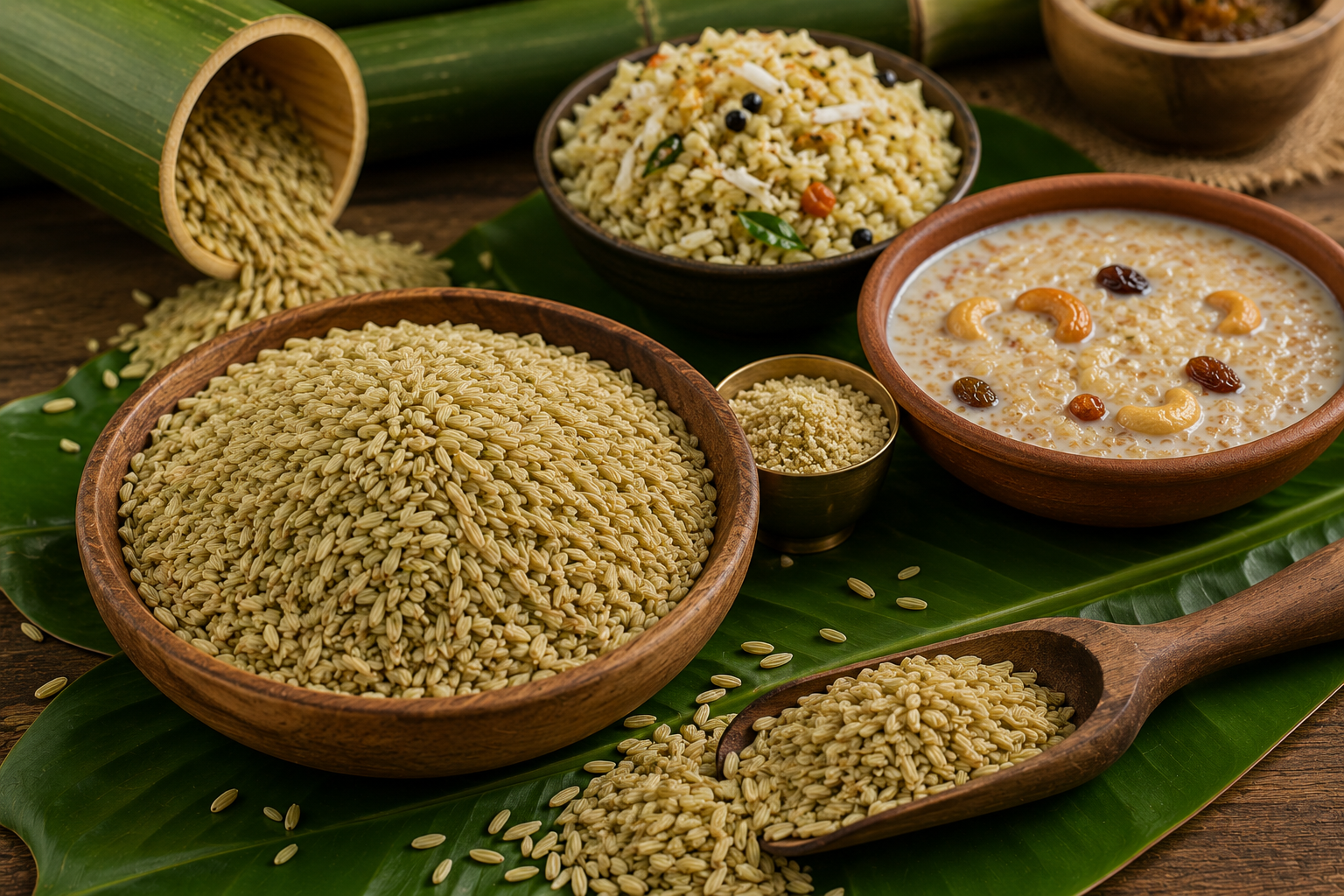
Rice from bamboo is a fascinating traditional food obtained from bamboo seeds rather than conventional rice plants. Also known as bamboo rice, moongil arisi, mulayari, or moongil rice in different regions, it has a distinctive connection with the natural flowering cycle of bamboo.
Unlike ordinary paddy rice, which is cultivated specifically for grain production, bamboo rice appears when certain bamboo plants flower and produce seeds. These seeds are collected, cleaned, processed, and prepared as a food ingredient.
For Kerala food enthusiasts and anyone interested in traditional forest foods, rice from bamboo offers an interesting look at how naturally occurring plant resources can become part of regional cuisine.
Kerala Naturals offers wild forest brown bamboo rice sourced from the Western Ghats and describes its product as natural, without added colours, preservatives, additives, or chemicals.
Table of Contents
- What Is Rice from Bamboo?
- Why Does Bamboo Produce Seeds?
- How Rice from Bamboo Is Harvested
- Cleaning and Sorting Bamboo Seeds
- Processing and Preparing the Grain
- What Does Bamboo Rice Look and Taste Like?
- How to Cook Rice from Bamboo
- Traditional Ways to Use Bamboo Rice
- Bamboo Rice Pulao
- Bamboo Rice Payasam
- Bamboo Rice for South Indian Recipes
- Rice from Bamboo vs Regular Rice
- How Kerala Naturals Bamboo Rice Fits Into Modern Kitchens
- Storage Tips for Bamboo Rice
- Frequently Asked Questions
- Conclusion
What Is Rice from Bamboo?
Rice from bamboo is the edible seed produced by certain bamboo species. Although the grains can resemble rice, they do not come from conventional rice plants.
The term “rice” describes the way these seeds are prepared and eaten rather than their botanical identity. Bamboo belongs to the grass family, and some bamboo species produce grain-like seeds after flowering.
Kew’s Plants of the World Online recognizes several bamboo species, including Bambusa bambos, as members of the grass family Poaceae. Its documented distribution includes India and other parts of tropical and subtropical Asia.
In South India, names such as moongil arisi and mulayari are associated with bamboo rice. The exact terminology can vary by language, community, region, and bamboo species.
This unusual origin is what makes rice from bamboo different from common rice varieties available in supermarkets.
Why Does Bamboo Produce Seeds?
The production of bamboo seeds is connected with bamboo flowering. Bamboo is well known for unusual flowering patterns, and different species can have different flowering behaviours.
When a mature bamboo plant flowers, its reproductive structures can eventually produce seeds. These seeds can then be collected and processed for traditional food use.
The flowering event is therefore an important stage in the story of rice from bamboo. Instead of harvesting grain from regularly cultivated paddy fields, bamboo seed collection depends on the reproductive cycle of the relevant bamboo plants.
It is important not to assume that every bamboo plant flowers on the same schedule. Flowering behaviour differs among bamboo species, so statements about bamboo flowering intervals should not be generalized across all varieties.
The botanical identity of the bamboo is also important. Kew’s database provides accepted scientific information about Bambusa bambos and records common names associated with the species, including names related to moongil.
How Rice from Bamboo Is Harvested
Harvesting rice from bamboo begins after flowering and seed formation. The timing depends on the bamboo species and local conditions.
Once mature seeds are available, they can be collected from the flowering bamboo. Traditional collection may involve gathering seeds from the plant or collecting mature seed material from the surrounding area.
The first objective is to obtain mature seeds while minimizing contamination from leaves, plant debris, soil, and other materials.
Because bamboo seed availability can be seasonal and irregular, bamboo rice is considered a specialty traditional food rather than a conventional year-round cereal crop.
Step 1: Identifying Mature Seed Material
The first step is recognizing suitable mature seed material.
Collectors need to distinguish mature seeds from immature reproductive material and plant debris. Proper identification is particularly important when collecting from natural or forest environments.
Step 2: Collecting the Seeds
The mature seed material is carefully collected. Traditional harvesting practices can vary depending on the location and bamboo species.
The collected material may contain husk, dried floral parts, leaves, dust, and other unwanted particles.
Step 3: Initial Cleaning
After collection, the seed material is separated from visible plant debris.
Winnowing and sorting can help remove lighter materials. Traditional grain-cleaning methods rely on differences in weight between the desired grain and unwanted materials.
ICAR has documented traditional and improved winnowing approaches for separating impurities from agricultural grains, demonstrating the importance of effective cleaning and separation in grain processing.
Cleaning and Sorting Bamboo Seeds
Cleaning is one of the most important stages in preparing rice from bamboo for cooking.
The collected seeds may contain natural impurities from the harvesting environment. Removing these materials helps improve the appearance and cooking quality of the final grain.
The cleaning process can include several simple stages:
- Removing leaves and larger plant material
- Separating visible foreign particles
- Winnowing lighter impurities
- Sorting the grain
- Checking the final material before processing
- Removing damaged or unsuitable grains where necessary
The exact method depends on how the bamboo seed has been harvested and processed.
For commercial products, additional quality-control and hygienic packing procedures are important before the product reaches consumers.
Processing and Preparing the Grain
Once the seeds are cleaned, they need to be processed into a form suitable for cooking.
Processing can involve removing unwanted outer material and preparing the grain for culinary use. The degree of processing can influence the final appearance, texture, cooking time, and flavour.
This is one reason rice from bamboo should not automatically be cooked using exactly the same method as every regular rice variety.
Kerala Naturals describes its bamboo rice as wild forest brown bamboo rice and states that it is carefully and hygienically packed to retain its original flavour and aroma.
When purchasing packaged bamboo rice, consumers should follow the preparation instructions provided for that particular product.
What Does Bamboo Rice Look and Taste Like?
Rice from bamboo can look similar to certain rice grains, but its appearance may differ from ordinary white rice.
The grain may have a naturally darker or brownish appearance depending on the source and processing method. Kerala Naturals specifically describes its product as wild forest brown bamboo rice.
Its flavour is also distinctive. Bamboo rice is often described as having an earthy or grain-like character. Kerala Naturals describes its bamboo rice as resembling paddy rice in appearance and having a taste similar to wheat.
The cooked texture depends on the product, soaking method, water quantity, and cooking technique.
For this reason, experimenting with the cooking method can help you find the texture that works best for your preferred recipe.
How to Cook Rice from Bamboo
Cooking rice from bamboo can be simple when the grain is properly cleaned and prepared.
Step 4: Rinse the Grain
Begin by measuring the required quantity and gently rinsing it with clean water.
Rinsing helps remove loose particles from the surface of the grain.
Step 5: Soak Before Cooking
Depending on the product and cooking method, soaking can help soften the grain before cooking.
The appropriate soaking duration may vary, so it is best to follow the package instructions when available.
Step 6: Cook Until Tender
After soaking, place the grain in a cooking vessel with the recommended amount of water.
Cook until the grains become tender. A pressure cooker, rice cooker, or conventional cooking pot can be used depending on the desired texture and available equipment.
Because bamboo rice products can differ in processing, avoid assuming that one fixed water-to-grain ratio works for every product.
Step 7: Rest and Serve
After cooking, allow the rice to rest briefly before serving.
Fluffing gently with a fork or spoon can help separate the cooked grains.
The finished rice can then be served with vegetables, curries, coconut-based dishes, lentils, or other traditional accompaniments.
Traditional Ways to Use Bamboo Rice
Rice from bamboo can be used in several traditional and modern recipes.
Its distinctive flavour makes it suitable for dishes where the grain itself is an important part of the meal.
Some possible uses include:
- Steamed bamboo rice
- Bamboo rice pulao
- Bamboo rice payasam
- Vegetable rice
- Coconut-based rice dishes
- Traditional festive recipes
- Rice-based breakfast preparations
- Experimental South Indian recipes
It can be particularly interesting for people who enjoy exploring regional ingredients and traditional forest foods.
For additional background, Kerala Naturals has also published information about bamboo rice and traditional recipe ideas on its website. Kerala Naturals Bamboo Rice article
Bamboo Rice Pulao
Bamboo rice can be used to create a simple pulao-style dish.
Start by preparing the grain according to the cooking instructions. In a separate pan, lightly cook onions, vegetables, and suitable whole spices.
Add the prepared bamboo rice and gently combine the ingredients.
You can use vegetables such as carrots, beans, peas, cauliflower, or seasonal produce.
The distinctive grain adds a traditional touch to an otherwise familiar rice preparation.
For a Kerala-inspired variation, coconut, curry leaves, and mild spices can be incorporated according to personal preference.
Bamboo Rice Payasam
Payasam is another interesting way to use rice from bamboo.
Cook the grain until tender and then simmer it with milk or coconut milk. Sweeten according to taste and add traditional ingredients such as cardamom, raisins, or nuts.
The darker colour of bamboo rice can give the finished dessert a visually distinctive appearance.
This type of preparation highlights how a traditional grain can be incorporated into familiar regional recipes.
Bamboo Rice for South Indian Recipes
Bamboo rice can also be explored in South Indian cooking.
Depending on the texture achieved after cooking, it may be suitable for experimenting with dishes inspired by traditional rice preparations.
However, substitution is not always one-to-one.
Different rice varieties behave differently during soaking, grinding, fermentation, steaming, and cooking. Therefore, recipes such as idli and dosa may require experimentation with soaking time and ingredient ratios.
For everyday cooking, starting with a simple cooked rice preparation is often the easiest way to understand the grain before trying more complex recipes.
Rice from Bamboo vs Regular Rice
The biggest difference between rice from bamboo and regular rice is their botanical origin.
Regular rice comes from cultivated rice plants in the genus Oryza. Bamboo rice comes from bamboo seeds.
There are also differences in availability. Regular rice is cultivated specifically as a staple grain, while bamboo seed production is connected to the flowering and reproductive cycle of bamboo.
Appearance can differ as well. Bamboo rice may have a naturally brownish or distinctive grain colour, while regular rice can range from white to brown, red, black, and other colours depending on variety and processing.
Flavour and texture are additional differences. Rice from bamboo can provide a different eating experience from commonly consumed rice varieties.
The table below provides a simple comparison:
| Feature | Rice from Bamboo | Regular Rice |
|---|---|---|
| Source | Bamboo seeds | Rice plants |
| Botanical group | Bamboo/grass family | Oryza rice species |
| Availability | Specialty and seasonal | Widely cultivated |
| Appearance | Often distinctive or brownish | Varies by rice variety |
| Flavour | Earthy, grain-like character | Varies by variety |
| Cooking | May require specific preparation | Depends on rice variety |
| Culinary use | Traditional and specialty recipes | Everyday staple dishes |
This distinction is useful because the name “bamboo rice” can sometimes make consumers think it is simply another rice variety.
It is better understood as a rice-like food prepared from bamboo seeds.
How Kerala Naturals Bamboo Rice Fits Into Modern Kitchens
Kerala Naturals offers Bamboo Rice described as 100% natural wild forest brown bamboo rice in a 500 g pack. The company states that the product comes from the Western Ghats and is packed without added colours, preservatives, additives, or chemicals.
Explore Kerala Naturals Bamboo Rice
The product can be introduced into the kitchen as a specialty grain for traditional meals, regional recipes, and culinary experimentation.
Kerala Naturals was established in Kerala in 2012 and states that it works with natural products sourced from farmers and traditional producers.
Learn more about Kerala Naturals
For readers interested in other traditional Kerala ingredients, the main Kerala Naturals website also provides access to herbs, spices, oils, teas, coffees, jackfruit products, and other natural foods.
Storage Tips for Bamboo Rice
Proper storage helps maintain the quality of packaged bamboo rice.
Keep the product in a cool, dry place away from moisture and direct sunlight.
After opening, use an airtight container if the original packaging is not resealable.
Avoid storing the grain near strong-smelling spices or ingredients because dry grains can absorb surrounding odours.
Always check the package for its best-before information and follow the manufacturer’s storage recommendations.
If you notice unusual moisture, insects, mould, or an unexpected smell, do not use the product.
Frequently Asked Questions
Is rice from bamboo actually rice?
No. Rice from bamboo is not conventional rice from the Oryza genus. It refers to edible seeds produced by bamboo plants that are prepared and eaten in a rice-like manner.
What is moongil arisi?
Moongil arisi is a regional term used for bamboo rice. “Moongil” refers to bamboo, while “arisi” refers to rice in Tamil usage.
What is mulayari?
Mulayari is another name used for bamboo rice in parts of South India. Names can vary according to local language and region.
How is rice from bamboo harvested?
It is harvested from mature bamboo seed material after flowering and seed formation. The seeds are collected, cleaned, sorted, and processed before being prepared as food.
Does bamboo rice taste like regular rice?
Not exactly. Its flavour and texture can differ from common rice varieties. Kerala Naturals describes its bamboo rice as resembling paddy rice in appearance and tasting similar to wheat.
Does bamboo rice need soaking?
Soaking can be useful depending on the product and cooking method. Always follow the instructions supplied with the particular bamboo rice you purchase.
What can I make with bamboo rice?
You can prepare cooked rice, pulao-style dishes, payasam, vegetable rice, and other traditional or experimental recipes.
Where can I learn more about bamboo plants?
Kew’s Plants of the World Online provides botanical information about bamboo species, including Bambusa bambos and its distribution. Kew Plants of the World Online – Bambusa bambos
For information about traditional agricultural knowledge and practices in India, the Indian Council of Agricultural Research also maintains resources on traditional knowledge in agriculture. ICAR Traditional Knowledge in Agriculture
Conclusion
Rice from bamboo is a unique traditional food that connects bamboo’s natural reproductive cycle with regional culinary traditions. Unlike ordinary rice, it comes from bamboo seeds produced after flowering and is therefore different in origin, availability, appearance, flavour, and preparation.
From seed collection and cleaning to processing and cooking, each stage contributes to the character of the final grain. Moongil arisi, mulayari, and moongil rice are names that reflect the cultural and regional identity associated with this unusual food.
For modern kitchens, rice from bamboo can be used in simple cooked-rice preparations, pulao, payasam, and other creative recipes. Kerala Naturals Bamboo Rice provides an accessible way to explore this traditional ingredient while following straightforward cooking and storage practices.
Most importantly, bamboo rice is best appreciated for what makes it different: it is a distinctive food derived from bamboo seeds, carrying a connection to traditional harvesting, regional food culture, and the natural biodiversity of the Western Ghats.