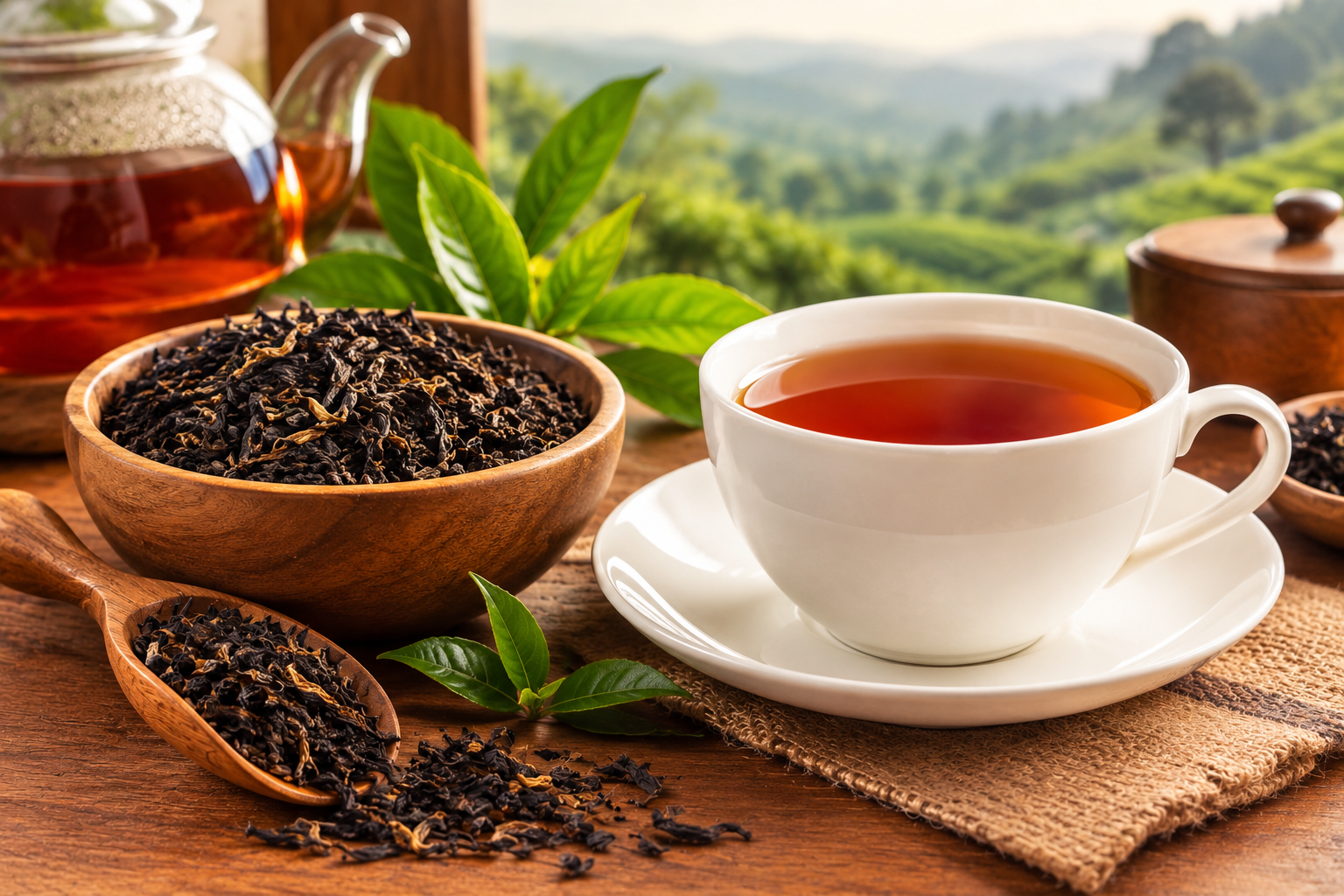
Orange pekoe tea for tea lovers offers an enjoyable combination of aroma, flavor, color, and versatility. For people who appreciate the character of loose-leaf black tea, a well-prepared cup can turn an ordinary tea break into a simple daily ritual.
Orange pekoe is a tea grade associated with black tea rather than a flavor made from oranges. The term describes the size and style of tea leaves used in grading systems. It does not mean that orange peel, orange juice, or citrus flavor has been added to the tea.
A quality cup begins with good leaves, fresh water, suitable brewing time, and careful storage. When these elements come together, the natural character of the tea becomes easier to appreciate.
For tea enthusiasts, the appeal goes beyond simply drinking a hot beverage. The aroma released during brewing, the brightness of the liquor, the texture on the palate, and the lingering finish all contribute to the experience.
Table of Contents
- What Is Orange Pekoe Tea?
- Why Choose Orange Pekoe Tea for Tea Lovers?
- Understanding Orange Pekoe Tea Flavor
- Exploring Orange Pekoe Tea Aroma
- The Connection Between Munnar Tea and Quality
- How to Brew Orange Pekoe Tea
- Tea Serving Ideas for Every Occasion
- How to Enjoy It Without Overcomplicating Your Routine
- Choosing and Storing Quality Tea
- Frequently Asked Questions
- Conclusion
What Is Orange Pekoe Tea?
Orange pekoe is commonly used as a grade designation for black tea. It is important to understand this distinction because the name can sometimes create confusion among people who are new to loose-leaf tea.
The word “orange” does not indicate the presence of oranges. Instead, orange pekoe describes a particular leaf grade within traditional tea grading systems.
Black tea is produced from the Camellia sinensis plant. During processing, the leaves undergo oxidation, which contributes to the darker color, stronger character, and distinctive flavor associated with black tea. Harvard’s Nutrition Source notes that black tea contains naturally occurring polyphenols, including theaflavins formed during oxidation.
Orange pekoe tea for tea lovers is therefore best understood as a style of black tea valued for its leaf appearance, brewing qualities, and overall drinking experience.
Why Choose Orange Pekoe Tea for Tea Lovers?
Orange pekoe tea for tea lovers can be a good choice for people who prefer a refined black tea with a clean and refreshing character.
A quality tea can offer a more enjoyable sensory experience than heavily sweetened ready-to-drink beverages. Brewing loose leaves also gives tea drinkers greater control over strength and flavor.
One of the biggest advantages is versatility. The tea can be enjoyed plain, with a little milk, with lemon, or as a chilled beverage. This makes it suitable for breakfast, afternoon breaks, workday pauses, and relaxed evening routines for people who are comfortable with caffeinated beverages later in the day.
The tea also contains naturally occurring caffeine. The exact amount varies with the leaf, serving size, and brewing method. Harvard’s Nutrition Source gives an approximate figure of 47 mg of caffeine for an 8-ounce cup of brewed black tea, although individual cups can vary considerably.
For tea lovers, choosing a quality loose-leaf product can make the brewing process itself part of the enjoyment.
Understanding Orange Pekoe Tea Flavor
Orange pekoe tea flavor can vary depending on the growing region, tea plant, harvesting conditions, leaf quality, processing, and brewing technique.
A well-prepared cup may have a smooth body with gentle astringency and a clean finish. Some teas can have subtle floral, malty, woody, or slightly sweet notes depending on their origin and processing.
The first few sips often reveal the basic character of the tea. As the cup cools slightly, additional aromas and flavor notes may become easier to notice.
This is one reason tea enthusiasts often prefer to drink quality tea without excessive sugar. Too much sweetener can cover the natural differences between varieties.
For orange pekoe tea for tea lovers, the goal is not necessarily to find the strongest possible cup. Instead, the aim is to find a balance between aroma, strength, smoothness, and aftertaste.
Exploring Orange Pekoe Tea Aroma
Orange pekoe tea aroma is an important part of the overall drinking experience. Much of what people describe as taste is connected to the aroma perceived while drinking.
Fresh tea leaves should have a pleasant natural scent rather than an unusual stale or musty smell. Once hot water is added, the aroma develops as the leaves release their soluble compounds.
The fragrance can range from fresh and floral to earthy, malty, woody, or gently sweet, depending on the tea. Regional growing conditions also influence the character of the finished leaf.
For people discovering orange pekoe tea for tea lovers, taking a moment to smell the brewed tea before drinking can make the experience more interesting.
A clear aroma does not automatically mean that a tea is better, but it can provide useful information about freshness and character.
The Connection Between Munnar Tea and Quality
Munnar tea has a distinctive identity because of the high-altitude tea-growing environment of Kerala’s Western Ghats.
Munnar is known for its cool climate, mist-covered hills, and tea plantations. These environmental conditions contribute to the characteristics of tea grown in the region.
A single-estate approach can also provide a clearer connection between the finished tea and its place of cultivation. Kerala Naturals’ Single Estate Munnar Orange Pekoe Tea, for example, is described as being made from young, tender upper-shoot leaves grown on high-altitude slopes in Munnar. The product description highlights a light, smooth flavor, natural aroma, bright color, and subtle floral notes.
This makes Munnar tea an interesting option for people who want to explore Indian tea origins while enjoying a lighter black tea style.
The regional connection is especially appealing to tea lovers who enjoy learning where their tea comes from.
How to Brew Orange Pekoe Tea
Good brewing technique can make a noticeable difference. Even high-quality tea can taste overly bitter or weak when the water-to-leaf ratio and steeping time are not suitable.
Start with fresh water and heat it properly. Add the recommended quantity of loose tea leaves to a teapot, infuser, or cup.
For a light cup, begin with a shorter steeping time. If you prefer more body, allow the leaves to steep slightly longer. Avoid automatically extending the brewing time when you want more strength because excessive steeping can increase bitterness and astringency.
Harvard’s Nutrition Source notes that black tea is generally brewed with hot or boiling water and that longer steeping produces stronger flavor along with more bitter notes.
For the Munnar Orange Pekoe Tea from Kerala Naturals, the product instructions recommend approximately ½–1 teaspoon of leaves and a steeping time of around 2–3 minutes.
A useful approach is to adjust the amount of tea before dramatically increasing steeping time. This allows you to find a balanced cup that suits your preference.
Tea Serving Ideas for Every Occasion
Tea serving ideas can be as simple or creative as you prefer. The natural flavor of orange pekoe works well with both traditional and modern serving styles.
Plain Black Tea
Serving the tea plain is one of the easiest ways to appreciate its natural character. This option allows the color, aroma, flavor, and finish to remain prominent.
It is particularly useful when tasting a new tea for the first time.
Tea with Lemon
A small amount of lemon can add freshness to black tea. The citrus character creates a bright contrast with the deeper notes of the brewed leaves.
Use lemon sparingly so that it complements rather than overwhelms the tea.
Tea with Milk
Milk can soften the astringency and create a creamier cup. Although some lighter orange pekoe teas are particularly enjoyable without milk, personal preference should guide the preparation.
Try the tea plain first before deciding whether milk improves the experience for you.
Lightly Sweetened Tea
If you prefer sweetness, use a small amount of sugar or another preferred sweetener. Keeping the quantity moderate allows more of the original tea flavor to remain noticeable.
For everyday drinking, reducing excessive added sugar can also help keep your beverage routine more balanced.
Iced Tea
Orange pekoe can also be transformed into a refreshing iced beverage. Brew the tea slightly stronger than usual, allow it to cool, and serve over ice.
Add lemon slices, fresh herbs, or a small amount of fruit for a simple summer variation.
How to Enjoy It Without Overcomplicating Your Routine
Orange pekoe tea for tea lovers does not require a complicated preparation ritual. A few consistent habits can help you get more enjoyment from every cup.
Use clean equipment and fresh water. Store the tea in an airtight container away from moisture, heat, direct sunlight, and strong-smelling foods.
Measure the leaves consistently so that you can reproduce a preferred cup. If the tea tastes too strong, reduce the quantity or steep for less time. If it tastes too weak, increase the leaf quantity slightly.
The ideal preparation is personal. Some people enjoy a delicate cup, while others prefer a stronger and more robust brew.
Tea drinking can also become a mindful break during a busy day. Instead of rushing through the cup, paying attention to the aroma and flavor can make a short tea break feel more satisfying.
Choosing and Storing Quality Tea
When buying premium tea, look at the appearance and condition of the leaves. Whole or larger leaves can offer an interesting brewing experience, although leaf size alone should not be treated as the only measure of quality.
Packaging is also important. Tea should be protected from moisture, excessive heat, air, and strong odors.
A fresh tea should retain a pleasant aroma after opening. If the leaves smell stale or unusual, their flavor may also have deteriorated.
For orange pekoe tea for tea lovers, single-estate sourcing can be another point to consider. It can help connect the tea with a specific growing region and provide greater traceability.
The Munnar origin is particularly attractive for people interested in Indian highland teas. The combination of regional identity and a lighter black tea profile makes it suitable for everyday brewing.
Tea and Naturally Occurring Plant Compounds
Black tea contains naturally occurring plant compounds, including polyphenols. Harvard Health explains that tea contains phytochemicals such as caffeine and polyphenols, while the specific compounds vary according to tea type and processing.
These compounds contribute to the color, aroma, flavor, and overall composition of tea.
It is important not to turn these properties into exaggerated health claims. Tea can be part of a balanced diet, but it should not be presented as a treatment or cure for a medical condition.
For most tea drinkers, the primary reason to choose orange pekoe is simple: they enjoy the taste and experience.
Caffeine sensitivity should also be considered. People who are sensitive to caffeine may prefer smaller servings or earlier consumption during the day.
Building a Better Daily Tea Habit
A good black tea routine starts with consistency rather than complicated rules.
Choose a convenient time for your cup, whether that is with breakfast, during an afternoon break, or while relaxing after work. If caffeine affects your sleep, avoid drinking caffeinated tea close to bedtime.
Keep the preparation simple. Fresh water, good leaves, suitable steeping time, and proper storage can make a significant difference.
Rotating between different tea styles can also keep your routine interesting. You may enjoy a lighter Munnar tea on one day and a stronger black tea on another.
The goal is to create a tea habit that fits naturally into your lifestyle.
Frequently Asked Questions
Is orange pekoe a type of orange-flavored tea?
No. Orange pekoe generally refers to a black tea leaf grade. The name does not mean that orange ingredients have been added.
What does orange pekoe tea taste like?
The flavor depends on the tea’s origin, processing, leaf quality, and brewing method. It can have a smooth body, gentle astringency, floral notes, and a clean finish.
Is Munnar tea good for black tea lovers?
Munnar tea can be an appealing choice for people who enjoy lighter, aromatic black teas. Its highland growing environment contributes to its distinctive regional character.
How long should orange pekoe tea be brewed?
Brewing time depends on the product and personal preference. A shorter steep generally produces a lighter cup, while longer steeping creates a stronger flavor. For the Kerala Naturals Munnar Orange Pekoe Tea, the recommended steeping time is around 2–3 minutes.
Can orange pekoe tea be served cold?
Yes. Brewed orange pekoe can be chilled and served over ice. Lemon, herbs, or fruit can be added according to taste.
Should orange pekoe tea be served with milk?
Milk is optional. A lighter tea may be especially enjoyable without milk because its natural aroma and flavor are easier to appreciate. However, serving preferences vary.
Conclusion
Orange pekoe tea for tea lovers brings together flavor, aroma, regional character, and simple preparation. Its appeal lies in the experience of brewing and enjoying a quality black tea rather than in complicated preparation methods.
From the delicate character of Munnar tea to the versatility of loose-leaf brewing, there are many reasons to make orange pekoe part of a regular tea routine. It can be enjoyed plain, with lemon, with milk, lightly sweetened, or chilled as an iced beverage.
For the best experience, choose fresh tea leaves, store them correctly, use fresh water, and adjust the brewing time to your taste. Paying attention to the orange pekoe tea flavor and orange pekoe tea aroma can also help you discover the qualities that make each tea distinctive.
For tea lovers who enjoy exploring Indian tea origins, Munnar offers an especially interesting connection between landscape, cultivation, and the finished cup. A thoughtfully prepared serving can make an ordinary break feel more enjoyable while keeping the focus on the natural character of the tea.