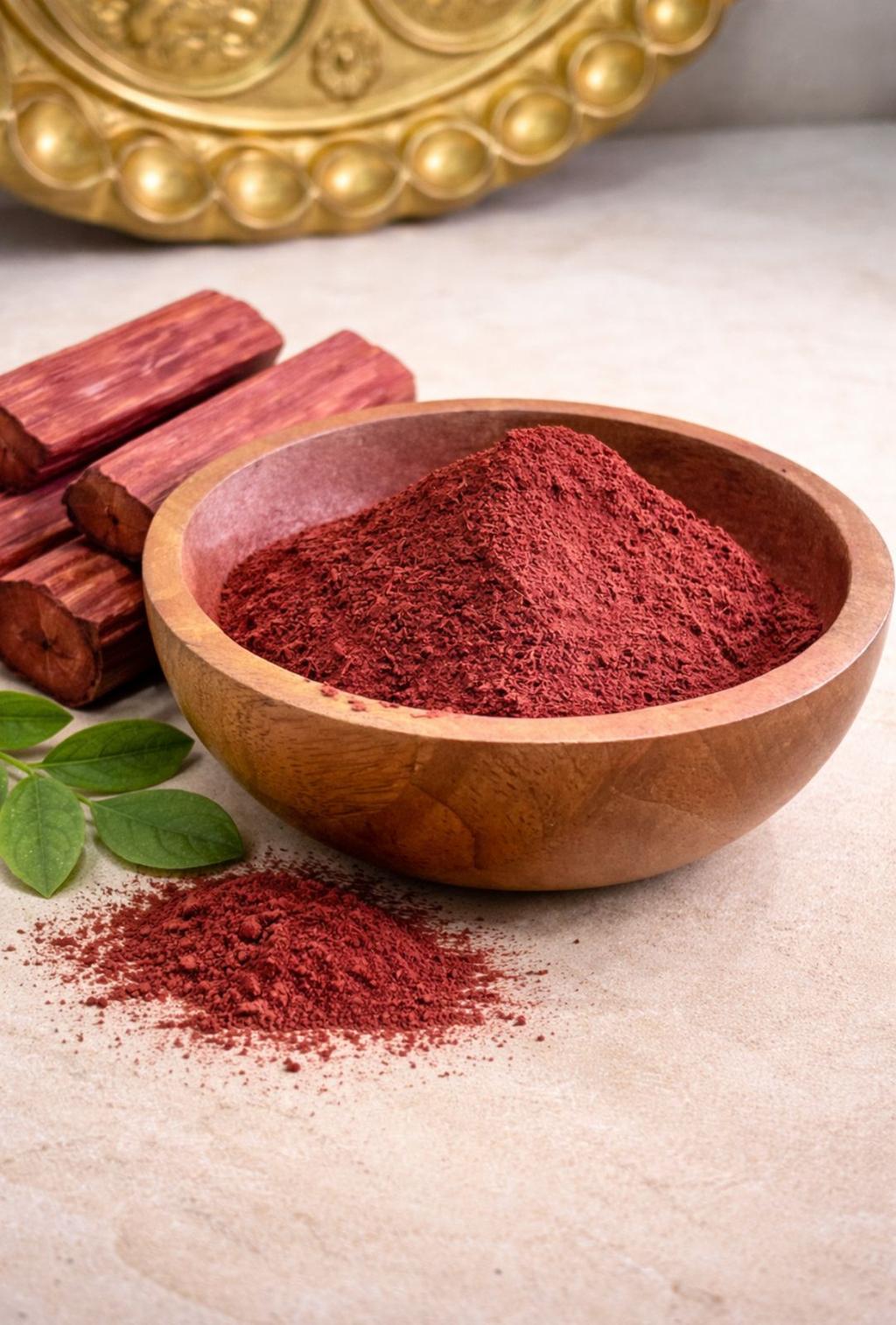
A red sandalwood powder face pack is a traditional choice for people who enjoy simple, plant-based skincare preparations. Known as Rakta Chandan, red sandalwood powder is traditionally used in Indian beauty rituals and homemade face masks. When combined with ingredients such as rose water, aloe vera, honey, or plain yoghurt, it creates a smooth paste that can be incorporated into a personal skincare routine.
Kerala Naturals offers red sandalwood powder for those interested in exploring traditional skincare ingredients. In this guide, discover five simple homemade face packs, learn how to prepare and apply them, and understand the precautions that help make your skincare routine more thoughtful.
Table of Contents
- What Is Red Sandalwood Powder?
- Traditional Uses and Skincare Expectations
- Five Red Sandalwood Powder Face Pack Recipes
- How to Apply a Face Pack Correctly
- Precautions for Different Skin Types
- How to Choose Quality Red Sandalwood Powder
- Frequently Asked Questions
- Conclusion
What Is Red Sandalwood Powder?
Red sandalwood powder is made from the heartwood of Pterocarpus santalinus, a tree native to parts of southern India. It is known for its reddish colour and its traditional role in cultural and cosmetic preparations.
Unlike white sandalwood, red sandalwood has a different botanical identity and appearance. The powder is commonly mixed with liquids or other ingredients to create homemade face masks.
A red sandalwood powder face pack can be prepared with a few simple ingredients. However, the quality of the finished preparation depends on the ingredients used, cleanliness during preparation, and individual skin sensitivity.
Traditional Uses and Skincare Expectations
Red sandalwood has a long history of traditional use in Indian beauty practices. It is often included in homemade preparations intended to leave the skin feeling refreshed and clean.
People commonly explore these preparations as part of their natural skincare routine. Nevertheless, traditional use does not establish that red sandalwood can reliably treat acne, remove pigmentation, eliminate dark spots, or permanently brighten skin. Strong clinical evidence for these specific effects is limited.
The recipes below are intended as optional cosmetic preparations rather than medical treatments. Gentle cleansing, moisturising, and daily sun protection remain important foundations of skincare.
Five Red Sandalwood Powder Face Pack Recipes
1. Red Sandalwood Powder with Rose Water
Rose water is a popular ingredient in traditional beauty preparations because it mixes easily with powdered ingredients. This simple recipe requires only two components.
Ingredients:
- 1 teaspoon red sandalwood powder
- 1–2 teaspoons rose water
Preparation method:
- Place the powder in a clean bowl.
- Add rose water gradually while stirring.
- Mix until the paste is smooth and spreadable.
- Add a few more drops of rose water if the mixture is too thick.
How to use it:
Apply a thin layer to clean skin, avoiding the eyes and lips. For your first application, leave it on for approximately 5–10 minutes, then rinse gently with lukewarm water. Pat the skin dry and apply a suitable moisturiser.
This red sandalwood powder face pack is a simple option for people who prefer a minimal-ingredient preparation. Choose rose water without added fragrance if fragrance tends to irritate your skin.
2. Red Sandalwood Powder with Aloe Vera Gel
Aloe vera gel is widely used in cosmetic formulations and is often chosen for its lightweight texture. Combining it with red sandalwood powder creates a smooth, easy-to-spread mixture.
Ingredients:
- 1 teaspoon red sandalwood powder
- 1–2 teaspoons plain aloe vera gel
Preparation method:
- Add the powder to a clean mixing bowl.
- Gradually incorporate the aloe vera gel.
- Stir until no dry lumps remain.
- Adjust the quantity of gel to achieve a creamy consistency.
How to use it:
Apply a thin layer to clean skin, avoiding sensitive areas. Rinse after approximately 5–10 minutes during your first trial. Follow with a moisturiser if needed.
Aloe vera can occasionally cause itching, burning, or a rash, even when used topically. Select a product with a clear ingredient list and avoid this recipe if you have previously reacted to aloe vera.
3. Red Sandalwood Powder with Plain Yoghurt
Plain yoghurt is used in some traditional homemade beauty preparations. Its creamy consistency makes it easy to combine with powdered ingredients.
Ingredients:
- 1 teaspoon red sandalwood powder
- 1 teaspoon plain, unsweetened yoghurt
Preparation method:
- Place the powder in a clean bowl.
- Add the yoghurt and mix thoroughly.
- Adjust the consistency with a little more yoghurt if necessary.
- Prepare only the amount required for one application.
How to use it:
Spread a thin layer over clean skin, avoiding the eye area. Leave it on briefly, approximately 5 minutes for an initial trial, and rinse thoroughly without scrubbing.
Yoghurt contains lactic acid, but the concentration and activity in a homemade mixture are not standardised. Do not expect this preparation to provide the same results as a formulated exfoliating product.
Avoid this recipe if you have a milk allergy or known sensitivity to yoghurt. Discard any leftover mixture instead of storing it for later use.
4. Red Sandalwood Powder with Honey
Honey is a familiar ingredient in traditional beauty preparations because of its thick consistency and ability to form a smooth paste with powders.
Ingredients:
- 1 teaspoon red sandalwood powder
- ½ teaspoon plain honey
- A few drops of clean water, if needed
Preparation method:
- Combine the powder and honey in a clean bowl.
- Stir until the ingredients are evenly mixed.
- Add a few drops of water if the paste is too thick.
- Ensure that the mixture can be spread without pulling or dragging the skin.
How to use it:
Apply a thin layer to clean skin. Keep the application brief during your first trial, then rinse thoroughly with lukewarm water. Avoid rubbing the mixture into your skin.
Honey can cause reactions in some individuals, and its sticky texture may make the preparation harder to remove. Use a small quantity and discontinue the recipe if you notice discomfort.
This preparation should be viewed as a traditional cosmetic option, not as a proven remedy for acne, scars, or pigmentation.
5. Red Sandalwood Powder with Cucumber
Cucumber is commonly included in homemade skincare recipes because it contains a high proportion of water and has a mild, fresh character. Fresh cucumber juice can be used to adjust the consistency of a powdered face mask.
Ingredients:
- 1 teaspoon red sandalwood powder
- 1–2 teaspoons freshly prepared cucumber juice
Preparation method:
- Wash the cucumber thoroughly before preparing the juice.
- Place the powder in a clean bowl.
- Add the juice gradually and mix until smooth.
- Use the preparation immediately.
How to use it:
Apply a thin layer to clean skin and leave it on briefly, approximately 5–10 minutes for the first trial. Rinse gently and pat dry.
Fresh cucumber juice is perishable, so do not store leftover mixture. Avoid this recipe if cucumber has previously caused a skin reaction.
As with other homemade face packs, the refreshing sensation should not be confused with a proven treatment for sunburn, acne, or uneven skin tone.
How to Apply a Red Sandalwood Powder Face Pack Correctly
Following a gentle application routine can help reduce unnecessary friction and irritation.
Step 1: Cleanse Your Skin
Wash your face using a gentle cleanser suitable for your skin type. Pat it dry rather than rubbing vigorously with a towel.
Step 2: Prepare a Fresh Mixture
Use a clean bowl and spoon. Add liquids gradually so that the paste is easy to spread and does not drip excessively.
Step 3: Apply a Thin Layer
Spread the mixture gently over the face, avoiding the eyes, lips, nostrils, and any broken or irritated skin. Do not scrub the powder into your skin.
Step 4: Rinse Thoroughly
Use lukewarm water to remove the preparation. Do not wait until the mask becomes painfully tight or uncomfortably dry.
Step 5: Moisturise
Pat your face dry and apply a suitable moisturiser. During the daytime, continue using broad-spectrum sunscreen with SPF 30 or higher.
There is no established ideal frequency for these homemade preparations. If your skin tolerates a recipe, occasional use may be more appropriate than frequent application. Stop using it if dryness or irritation develops.
Precautions for Different Skin Types
For Oily Skin
Choose lightweight products for the rest of your routine and avoid excessive cleansing or scrubbing. A homemade face pack is not a proven method of controlling sebum production or preventing acne.
For Dry Skin
Avoid leaving a mask on until it becomes tight or flaky. Rinse promptly if your skin feels uncomfortable, and follow with a moisturiser suited to dry skin.
For Sensitive Skin
Keep the ingredient list simple and avoid added fragrances or other ingredients known to trigger reactions. If you have a history of allergic skin reactions, consult a dermatologist before trying unfamiliar preparations.
For Acne-Prone Skin
Avoid applying homemade mixtures to inflamed or broken skin. Do not scrub active breakouts, and do not substitute a face pack for evidence-based acne care.
Patch Testing Before Use
Before applying any new mixture to your face, test it on a small area of skin first. The American Academy of Dermatology recommends testing skincare products on a small area twice daily for 7–10 days before regular use. A short test cannot rule out every possible reaction, so remain alert to changes in your skin.
If you experience burning, itching, swelling, or redness, wash the mixture off and discontinue use. Seek medical advice if the reaction is severe or persistent.
For additional guidance, read the American Academy of Dermatology’s skincare product testing advice.
How to Choose Quality Red Sandalwood Powder
Choosing an appropriate product is an important part of a responsible skincare routine.
When buying red sandalwood powder, consider the following:
- Ingredient identity: Look for clear information identifying red sandalwood and its botanical name, Pterocarpus santalinus.
- Ingredient list: Check whether the product contains only the ingredient you intend to purchase.
- Supplier transparency: Prefer suppliers that provide contact details and clear product information.
- Packaging: Choose sealed packaging that protects the powder from moisture and contamination.
- Storage: Keep the powder in a cool, dry place, away from direct sunlight, and close the container securely after use.
Colour alone cannot establish purity or prove that a powder is safe for cosmetic use. Choose a supplier that provides clear sourcing and quality information.
You can explore Kerala Naturals Red Sandalwood Powder for product details and usage information. You can also browse the Kerala Naturals skincare collection for other personal-care ingredients.
Frequently Asked Questions
Can I use a red sandalwood powder face pack every day?
Daily use is not necessary, and there is no strong clinical evidence establishing an ideal frequency. Frequent application may cause dryness or irritation. Start cautiously and stop if your skin reacts.
Which ingredient works best with red sandalwood powder?
Rose water, aloe vera gel, honey, plain yoghurt, and cucumber juice are commonly used in homemade recipes. No single combination has been established as the best option for every skin type. Choose ingredients you already tolerate.
Can these face packs remove dark spots?
There is insufficient reliable clinical evidence that homemade red sandalwood preparations remove dark spots or permanently change skin tone. Persistent pigmentation may require professional assessment and evidence-based treatment.
Is natural skincare always safe?
No. Plant-derived ingredients can still cause irritation, allergic reactions, or contamination. Read labels, use clean preparation methods, and patch-test unfamiliar products.
For further information about cosmetic safety and ingredient labelling, consult the U.S. Food and Drug Administration’s guide to using cosmetics safely.
Conclusion
A red sandalwood powder face pack can be prepared in several traditional ways using ingredients such as rose water, aloe vera gel, plain yoghurt, honey, or cucumber juice. These five recipes offer simple options for people interested in exploring homemade skincare.
The most important considerations are choosing quality ingredients, preparing fresh mixtures, applying them gently, and checking for skin sensitivity. Traditional use should not be confused with proven treatment for acne, pigmentation, or other skin conditions.
Explore the skincare ingredients available from Kerala Naturals, choose a preparation that suits your preferences, and keep your routine gentle and consistent. Healthy-looking skin depends on appropriate daily care, moisturising, sun protection, and seeking professional advice when skin concerns persist.
External Resources
- American Academy of Dermatology – How to Test Skin Care Products
https://www.aad.org/public/everyday-care/skin-care-secrets/anti-aging/wrinkle-remedies/
Learn how to test skincare products before applying them to your face. - U.S. Food and Drug Administration – Using Cosmetics Safely
https://www.fda.gov/cosmetics/resources-consumers-cosmetics/using-cosmetics-safely
Read practical advice on cosmetic safety, product labels, and possible skin reactions. - National Center for Complementary and Integrative Health – Aloe Vera
https://www.nccih.nih.gov/health/aloe-vera
Explore available evidence and safety information about aloe vera, an ingredient used in one of the face-pack recipes.